Research Caryl Churchill
Caryl Churchill
LOVE & INFORMATION

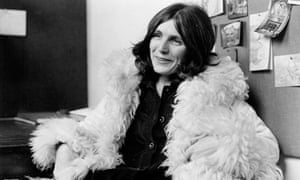
Caryl always manages to have her pulse on the moral, social, and political issues that are current in our society. She is and has consistently been throughout her career, a formal adventurer in terms of her theatrical language so that she’s constantly challenging not just literally the language in which theatre is spoken, but also the context, the theatricality and the dramatic landscape in which she works. In that sense, she is one of the great innovators of post-war British drama. Stephen Daldry, Royal Court Artistic Director, 1992-1998, in an extract from The Royal Court Theatre: Inside Out by Ruth Little and Emily MacLaughlin, Oberon, 2007
| Caryl Churchill’s play, Love and Information, presents a shift in focus from unstable personal and political identity towards unstable logical identity, a philosophical concept that takes identity out of the realm of identity politics... As a new play Love and Information has understandably been subject to very little scholarly analysis. This thesis situates the play within Churchill’s corpus in order to consider how the depersonalized identities of this play fit within the broader scope of Churchill’s work. Anchored in Elin Diamond’s study of gender identity in Churchill’s corpus, this thesis will further incorporate theories of logical identity as well as theories of language in order to define what I argue is Churchill’s shift towards logical identity. Through a study of both the text of Love and Information and the 2014 New York première, I conclude that Love and Information represents a shift in focus while Churchill maintains her playwriting methodology. |
Playwright Caryl Churchill was born on 3 September 1938 in London and grew up in the Lake District and in Montreal. She was educated at Lady Margaret Hall, Oxford, where she read English. Downstairs, her first play, was written while she was still at university, was first staged in 1958 and won an award at the Sunday Times National Union of Students Drama Festival. She wrote a number of plays for BBC radio including The Ants (1962), Lovesick (1967) and Abortive (1971). The Judge's Wife was televised by the BBC in 1972 and Owners, her first professional stage production, premiered at the Royal Court Theatre in London in the same year. She was Resident Dramatist at the Royal Court (1974-5) and spent much of the 1970s and the 1980s working with the theatre groups 'Joint Stock' and 'Monstrous Regiment'. Her work during this period includes Light Shining in Buckinghamshire (1976), Cloud Nine (1979), Fen (1983) and A Mouthful of Birds (1986), written with David Lan. Three More Sleepless Nights was first produced at the Soho Poly, London, in 1980. Top Girls brings together five historical female characters at a dinner party in a London the restaurant is given by Marlene, the new managing director of 'Top Girls' employment agency. The play was first staged at the Royal Court in 1982, directed by Max Stafford-Clark. It transferred to Joseph Papp's Public Theatre in New York later that year. Serious Money was first produced at the Royal Court in 1987 and won the Evening Standard Award for Best Comedy of the Year and the Laurence Olivier/BBC Award for Best New Play. More recent plays include Mad Forest (1990), written after a visit to Romania, and The Skriker (1994). Her plays for television include The After Dinner Joke (1978) and Crimes (1982). Far Away premiered at the Royal Court in 2000, directed by Stephen Daldry. She has also published a new translation of Seneca's Thyestes (2001), and A Number (2002), which addresses the subject of human cloning. Her new version of August Strindberg's A Dream Play (2005),

Comments
Post a Comment